
Winter weather can be tough on trees. Strong winds, heavy rain, frost and occasional snow all put extra strain on branches, trunks, and roots. In the aftermath of a storm, inspecting trees for damage is critical. Even if a tree remains standing, hidden damage can leave it at risk.
Taking the time to check your trees after bad weather can help prevent future problems and keep people and property safe.
What to look for in trees after a storm
A common mistake that people make is to assume that if a tree didn’t fall during the storm, then it will continue to hold its ground. Unfortunately, this isn’t always the case. A tree can be damaged in a storm, weakening it, meaning it is at risk of falling or damaging your property in the future.
Here are some key signs to look out for:
Leaning trees
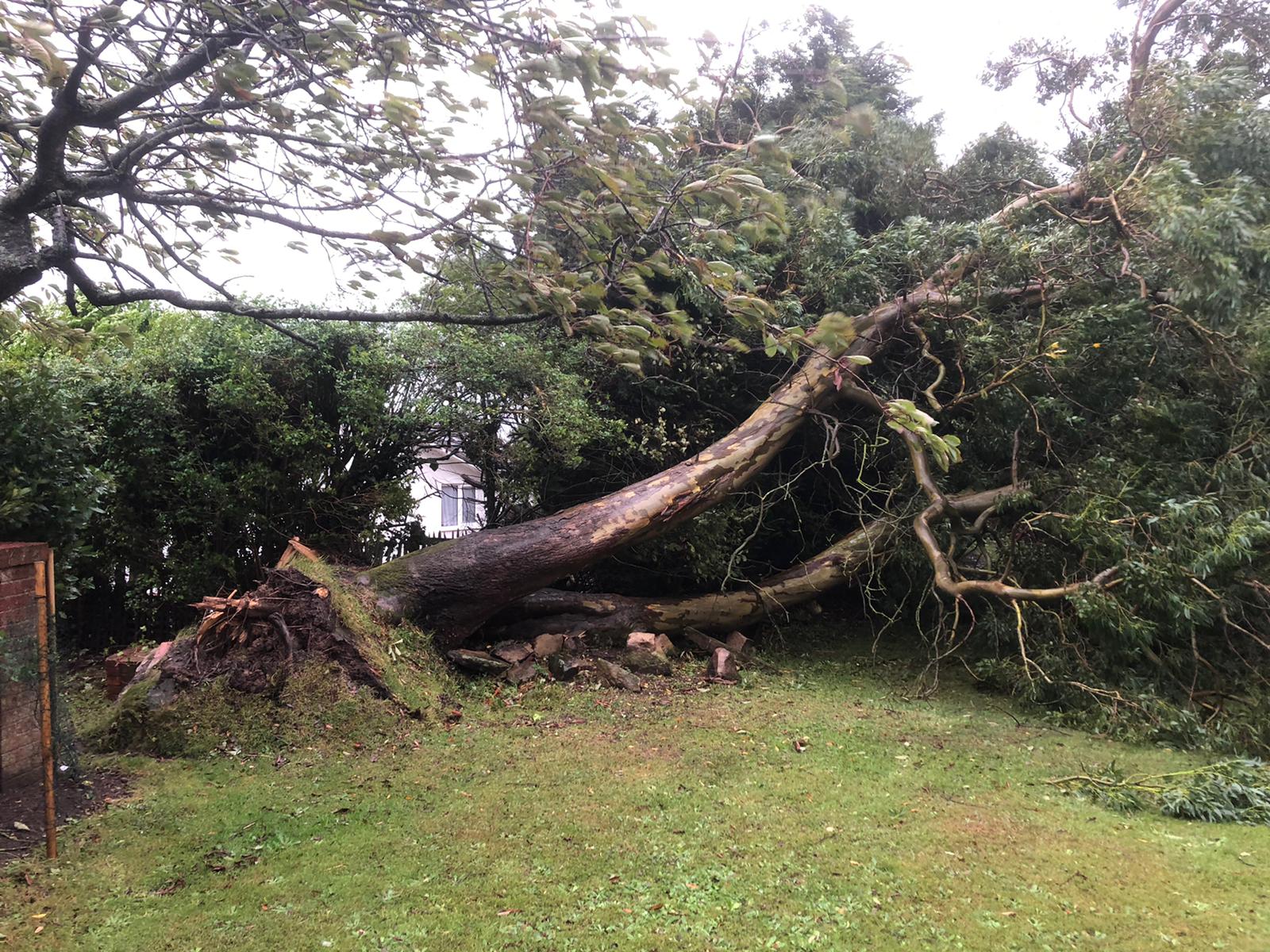
Trees leaning at unnatural angles or, worse, completely uprooted, are one of the most clear indications of storm-related stress. This type of damage not only jeopardises the affected tree but also poses a risk to nearby properties and individuals.Identifying leaning or uprooted trees is key when determining the extent of damage and the necessary course of action. This may require stabilising it, or emergency tree removal.
Broken or hanging branches
One of the other most obvious indicators of storm damage is the presence of broken or hanging branches. These can pose immediate threats, especially if hanging dangerously over structures or pathways.
After a storm, check your trees for branches that have snapped, cracked, or split. Damaged branches can fall without warning, putting people and property at risk and placing extra strain on the tree.
If you notice large or hard to reach branches that are damaged, it is best to call us to arrange safe pruning and removal.
Co-dominant stems.
A less obvious sign of damage is splitting in the bark or main stem. Some trees develop more than one trunk, known as co-dominant stems. These can often be weak at the join and prone to instability.
The weakness often comes from included bark. This happens when two stems or branches grow very close together and trap bark between them. Over time, this creates a poor join that is more likely to split, especially where the angle between the stems is tight.
Winter storms put a lot of pressure on these weak points, even if the damage is not easy to see straight away. Checking the trunk for vertical cracks or splits along these joins can help spot problems that may affect the tree’s stability in future.
Cavities and decay.
If you find cavities or decay after a storm where branches meet, the trunk base, or the root flare, there is a definite cause for concern. Strong winds, cold weather, and lightning can all start or worsen decay, although the signs are not always obvious straight away.
Dead patches of bark, known as cankers, or fungal growth on the trunk or exposed roots can point to decay at the base of the tree or dieback higher up. As decay spreads, the wood becomes weaker and the risk of failure increases.
Do not try to clean out or seal cavities yourself, as this can cause further damage. If you spot these signs, it is best to call professionals like ourselves to assess the tree properly.
Assessing the severity of tree damage
Once you’ve spotted visible signs of damage, the next step is to judge the severity so you can decide what to do next. Understanding the difference between minor and major damage helps you manage the risks safely.
Minor damage may involve small, isolated branches that can be pruned. More serious damage, such as extensive structural issues or complete uprooting, requires immediate attention by a professional.
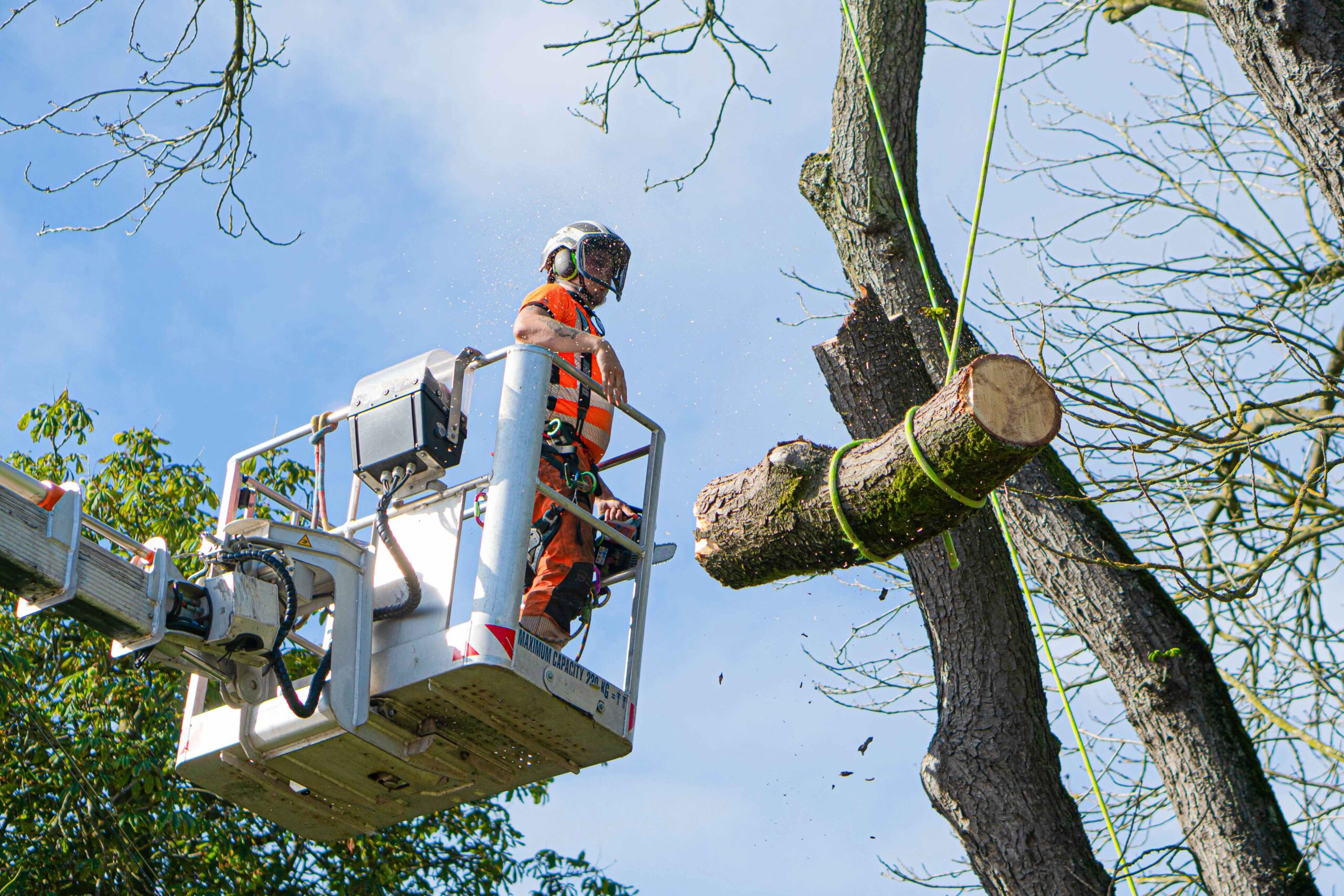
Damaged trees can drop limbs or become unstable, so it is important to act carefully. If you are unsure, it is always best to keep your distance and seek professional advice. The team at Dr Stump can assess the tree’s condition after a storm and advise on the safest option, whether that is remedial work or removal.
Keeping safe
Safety should always come first when checking trees after a storm. Having a qualified arborist to carry out the inspection for you is often the safest option. At Dr Stump, the team are trained to spot signs of stress or factures in trees and can advise on the best course of action.
If you do carry out a basic visual check yourself, wear any protective equipment you have, such as a hard hat and sturdy footwear. This will help to protect you from hazards such as falling branches and debris. Wherever possible, keep your distance from the tree in question.
If a tree is resting on or has brought down a power line, do not approach it or the surrounding area. There is a serious risk of electric shock. If others could be at risk or there is a chance of fire, call the emergency services. You should then contact UK Power networks or your local utility provider, who will send a qualified team to deal with the situation.
Emergency tree care with Dr Stump
The team at Dr Stump are qualified to assess trees that have been damaged by storms or severe weather. When you contact us, we put a clear and complaint plan in place and provide a full risk assessment before any work begins. We’ll agree the safest way forward and talk you through the next steps, so that you’re clear on your options.
If you have a tree that poses a risk to nearby buildings, vehicles or people, even outside of storm conditions, please get in touch. We carry out both removal and remedial work and can deal with difficult situations safely and professionally. Contact us today via Whatsapp, our online form, or by calling 01603 358778.