
Trees are tougher than we often think. When they are damaged or start to decay, they have a clever way of protecting themselves. This natural process is called CODIT and it helps a tree slow down the spread of infection so it can stay standing for longer. In this guide, we explain what CODIT is, how it works and what it means for the trees in your garden.
What is CODIT?
CODIT stands for the Compartmentalisation Of Decay In Trees. In arboricultural terms, it describes the natural process trees use to slow or stop the spread of decay after being wounded or infected by fungi.
The concept was first described by Dr Alex Shigo, a plant pathologist and biologist. He explained that trees respond to damage by creating barriers, also known as ‘the barrier zone’ that isolate the affected area. By doing this, the tree protects healthy wood from rot and keeps itself alive for longer.
Think of it like a ship taking on water. When a compartment is breached, the crew shuts watertight doors to stop the ship from sinking. Trees do the same, sealing off infected areas to stop decay from spreading.
The four walls of CODIT
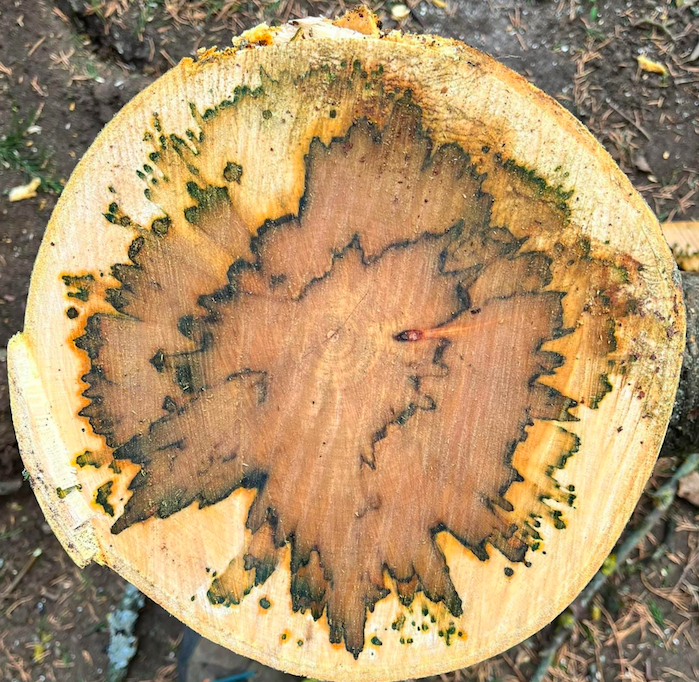
A tree will create barriers around any wounds, known as ‘walls’. There are 4 different types which react differently to infection.
Wall 1 – vertical wall
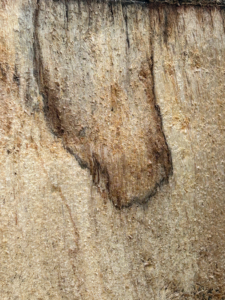
As the weakest barrier, this wall blocks the vertical spread of decay up and down the stem or branch. It forms by plugging cells in the tree’s water transport system (xylem) with a process called tylosis.
Wall 2 – tangential wall
This wall slows decay from moving inwards. It is made from lignin-rich cells that form at the end of each annual growth ring. While not continuous, it provides a stronger barrier than Wall 1.
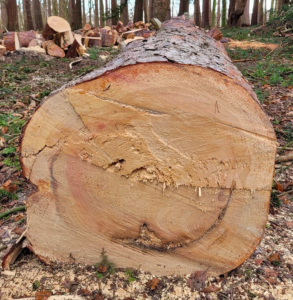
Wall 3 – radial wall
This barrier is made from ray cells that radiate outwards like slices of a pie. These cells are thick and closely packed, forming maze-like structures that hinder decay. They can even change chemically to become toxic to microorganisms. Wall 3 is the strongest barrier before the tree creates Wall 4.
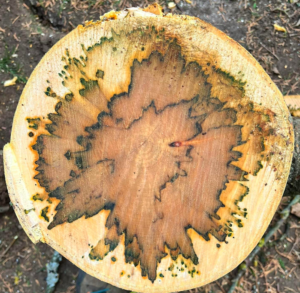
Wall 4 – barrier zone
The strongest wall is created by the cambium, which produces new tissue to seal the wound from the outside. Over time, this forms callus wood that may eventually cover the wound. However, it may not always fully close, which is why some hollow trees continue to live with sound, healthy outer wood.
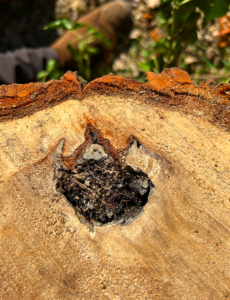
Example of wall 4 – Callus formation. The tree seals the wound with new tissue that develops over time into specialised cells to help repair and protect the damaged area.
Does CODIT always work?
In short, not always. Trees have limited energy which they divide between root growth, foliage, branch development and defence responses like CODIT. If there are too many wounds to compartmentalise, the tree can become stressed. This may reduce its ability to move nutrients and water, leading to dieback, structural weakness, or even death.
On the other hand, small amounts of decay are often manageable. Where wounds remain partly open, they can provide valuable habitat for wildlife such as birds, bats, bees and invertebrates, supporting wider biodiversity.
How can we tell if a tree is rotten?
Sometimes, a wound can close over but still leave a weak point inside the tree. These weaknesses may not be visible from the outside and are often only spotted by a trained arborist.
To check the tree’s internal strength, arborists use several tools and techniques. These range from simple methods, like tapping the trunk with a mallet to listen for hollow areas, to more advanced options such as:
Resistograph microdrill – measures how much resistance the wood gives as a fine drill moves through it, helping to locate decay.
Sonic tomography – a newer, non-invasive method that uses soundwaves to build a 2D or 3D image of the tree’s internal structure.
Sonic tomography is often carried out around the base of the trunk, where the roots meet the stem, but it can also be used higher up if decay is suspected in a large branch or union. The results help a qualified arborist assess the tree’s condition and understand how likely it is to fail.
What should I do if a tree is damaged?
If a branch has snapped or your tree looks as if it’s decaying or damaged, the best thing you can do is keep the area clean and leave the tree to begin its own healing process. A tree will naturally work to seal a wound. This is part of CODIT and it helps protect the healthy wood.
Avoid painting the wound or filling it with soil, foam or concrete. These products can trap moisture and make the issue worse. They can also get in the way of the tree’s natural defence walls.
If the damage is small, the tree may cope well on its own. If the damage is large of you are unsure, it is safer to have the tree checked. A qualified arborist can look at the size of the wound, the strength of the surrounding wood, and the overall health of the tree. Poor pruning or the wrong treatment can slow healing, so it’s always better to get the right advice before any work is carried out.
Need help or a second opinion?
If you’re worried about a damaged or decaying tree, we’re always happy to help. Send Dr Stump a Whatsapp message with a photo or quick description. We can take a look, talk you through what’s going on and guide you on the best next steps.